About Movasta Veyra
Veyra is three islands, two straits, one steep hill and about 190,000 people who need to be somewhere. We are the authority that gets them there.
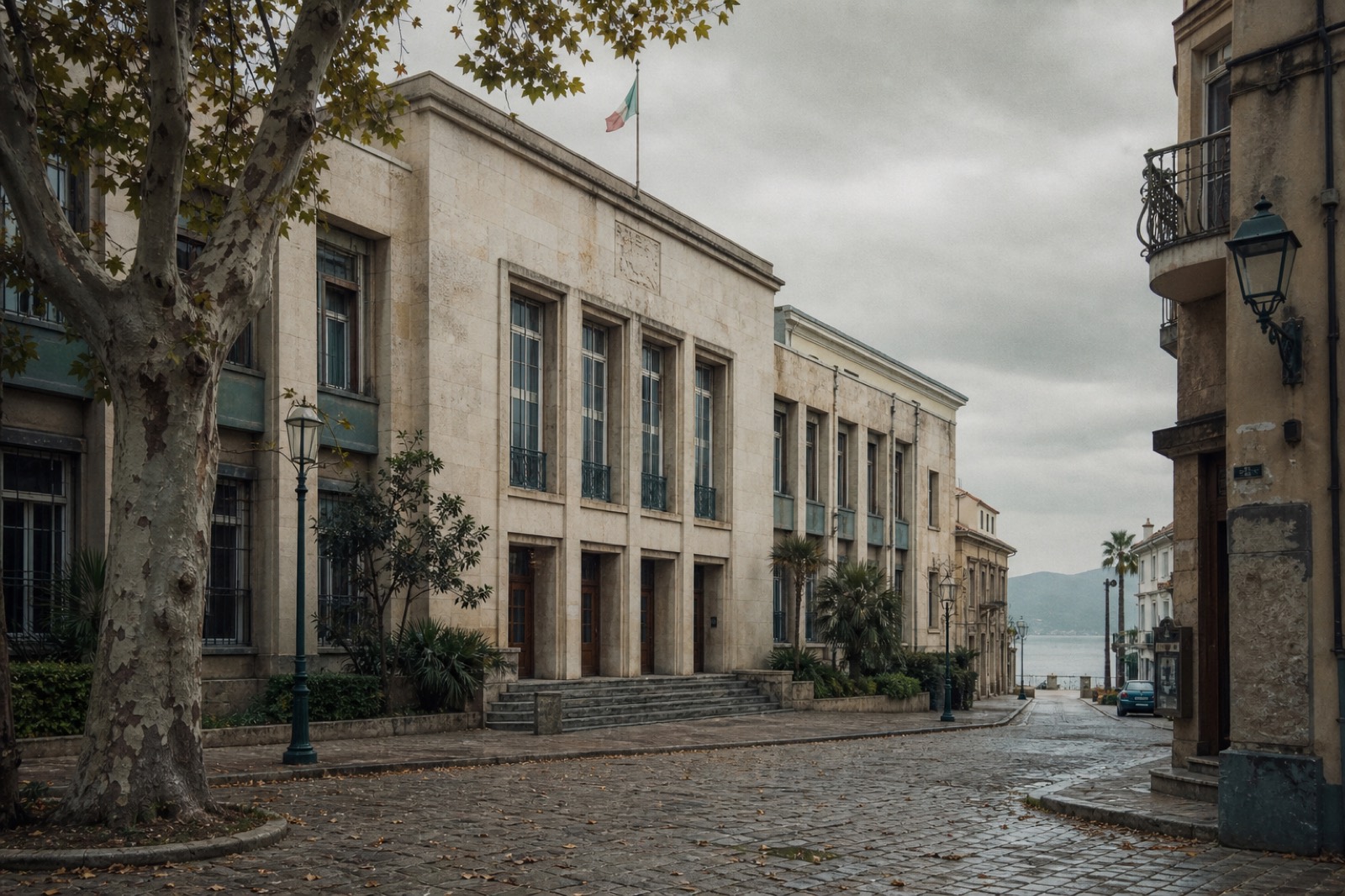
The city
The Veyra archipelago sits alone in the Middle Sound: Veymar, the main island, with its old harbour and its stone hill; Isla Brenna to the south-east, still smelling of boatyards and pine; Navama to the north, where the new harbour took the deep-water traffic in the 1970s; and little Isla Avi, all birds and allotments. The climate is mild, wet in the dark months, and windy enough that Veyrans grade weather by whether the ferries are running — which, on 98.6% of days last year, they were.
Veyric, the local language, survived centuries of passing empires mostly because nobody could be bothered to climb the hill and enforce anything else. Every stop on our network carries its Veyric name first and its English name second, and we intend to keep it that way.
The authority
Movasta Veyra — literally "the moving of Veyra" — was chartered by the Veyra Assembly in 1953 to merge three quarrelling private operators: the hill tramway, the harbour boats, and the half-built tunnel under Brenkel. The tunnel opened in 1961 as the Torulin, the hill line followed in 1974, and the tram was rebuilt rather than retired, because the Assembly correctly judged that the city would riot otherwise.
Today we run five lines across three modes with a staff of 640, carry roughly 31 million passengers a year, and answer to a public board that meets — minutes published — on the first Tosveya of every month at Movasta House.
How we speak
Plainly. When a line is late, we say so and say why. When work will disrupt your week, we tell you before it starts, in Veyric and English, on every affected platform. Our standing farewell, printed on every ticket since 1953, is vesse mova — travel well.
Accessibility
- Every metro station has step-free access from street to platform; lifts at Brenkel and Kelamar are maintained nightly and their live status is posted at station entrances.
- All trams are low-floor. The rebuilt stops at San Miral and Kestra have raised boarding islands; the remaining stops board from street level with a ramp the driver deploys on request.
- All ferries take wheelchairs, prams and cycles on the main deck; crews assist with boarding at every pier. Isla Avi pier has a tidal ramp that steepens at low water — staff are always present.
- Audio and visual next-stop announcements run on every vehicle. Network maps in tactile relief are installed at Velka Toru, Navasan and Toru Nava.
- Assistance can be booked but never has to be: turn up and travel. To plan ahead, call +59 (0)4 552 1000 (option 3), any day 06:00–22:00.
Facts & figures
| Chartered | 1953, by act of the Veyra Assembly |
|---|---|
| Lines | 2 metro · 1 tram · 2 ferry |
| Stations & piers | 20 |
| Passengers (last year) | 31.2 million |
| Punctuality | 94.1% within 3 minutes |
| Staff | 640 |