About
An archipelago that built its own way around
Kalmoro is a self-governing island city-state in the Selvane Sea, spread across five inhabited isles of the Kalmoro Isles. Home to some 417,000 Kalmorans, it has spent seven centuries turning a scatter of fishing settlements into one city joined by bridges, funiculars and ferries.
Geography & climate
Kalmoro Isle, the largest and oldest-settled island, holds the historic Old Harbour, the New Quarter downtown, and Mont Alzar, a 150-metre volcanic remnant that dominates the western skyline. Two smaller isles — Insa Norlan to the north and Insa Sural to the south — are joined to the main island by road-and-rail bridges. Two further isles, Kesa Verda and Kesa Pel, sit further out in the Selvane Sea and are reachable only by water.
The climate is mild and maritime: dry, warm summers around 24–31°C, and wet, gentle winters rarely below 11°C. From October to March, Kalmoro is shaped by the Vashtel, a persistent easterly wind that locals set their sailing — and their ferry timetables — around.
Governance & the authority
Kalmoro is governed by an elected Council of the Isles and a Chief Warden, who together set policy for the whole city-state, transit included. Kalmoro Transit Authority(Vesera Kelvun Kalmoro, abbreviated VKK) has operated as an independent public authority since 1968, accountable to the Council but free to set fares, timetables and service standards on its own published rules — the same rules this site's fare calculator uses.
The Authority speaks to the public in both of Kalmoro's languages, always Kalmishfirst: every line, station, and announcement carries its Kalmish name alongside an English one, in that order, everywhere from the departure boards to the timetables you can print at home.
How the network grew
- 1361
The Founding Compact
Fisherfolk guilds from across the isles unite against pirate raids, forming the self-governing city-state of Kalmoro.
- 1902
The Old Town tramway
The Vellaporto Tramway Company opens Kalmoro’s first public transport: a horse tram looping the Old Harbour and market quarter.
- 1911
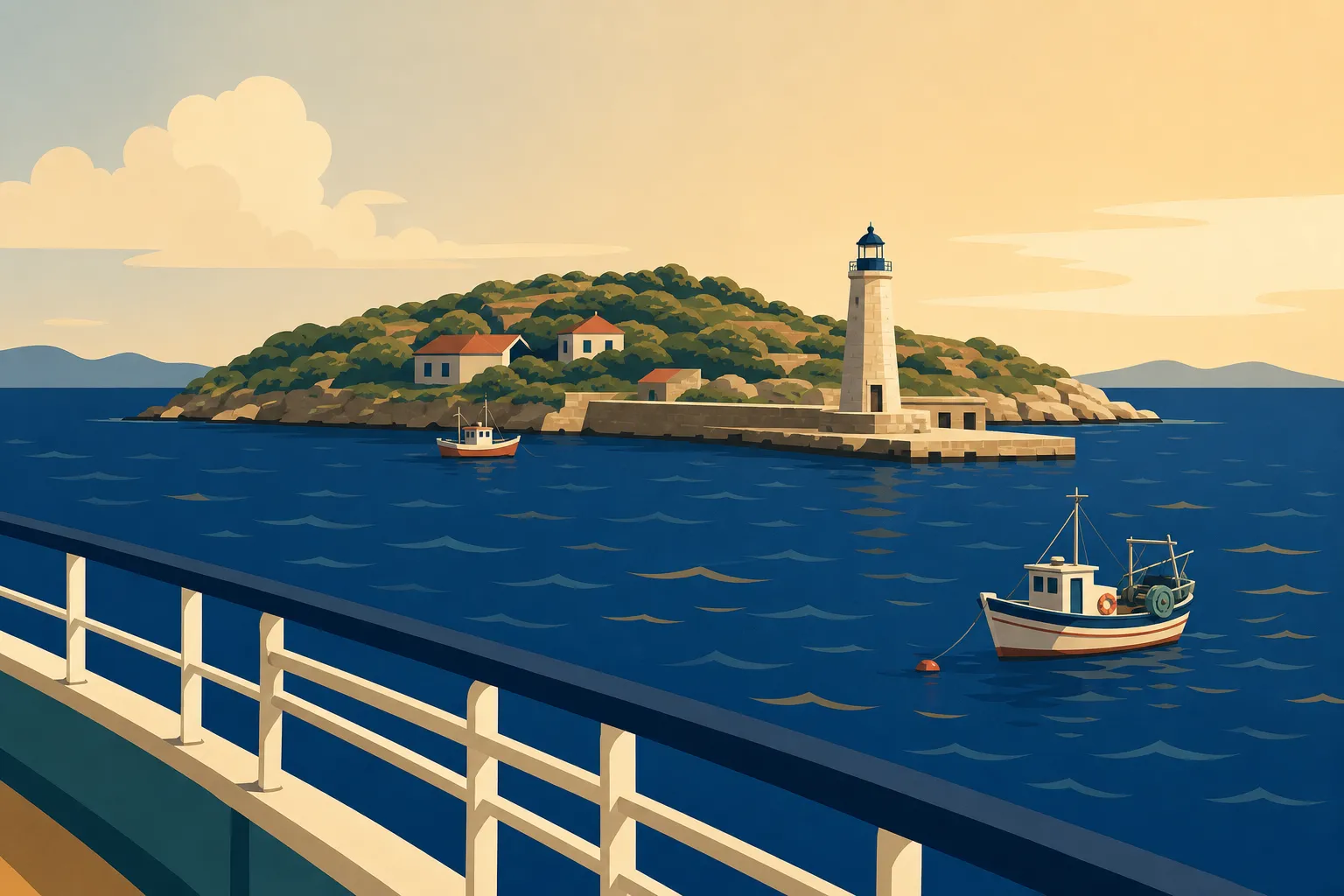
The Municipal Ferry Board
A publicly run ferry service begins, linking Vellaporto to the fishing communities of Kesa Verda and Kesa Pel for the first time on a fixed timetable.
- 1921
Electrification
The Old Town tram is electrified, and a second horse-drawn route is retired.
- 1968
Vesera Kelvun Kalmoro is founded
The tramway, the ferry board and the city’s first metro plans are brought together under one public authority: the Kalmoro Transit Authority.
- 1974
The Gold Line opens
Undreva Ouro replaces the Old Town tram along a similar corridor, and extends across the newly built North Bridge to Insa Norlan.
- 1989
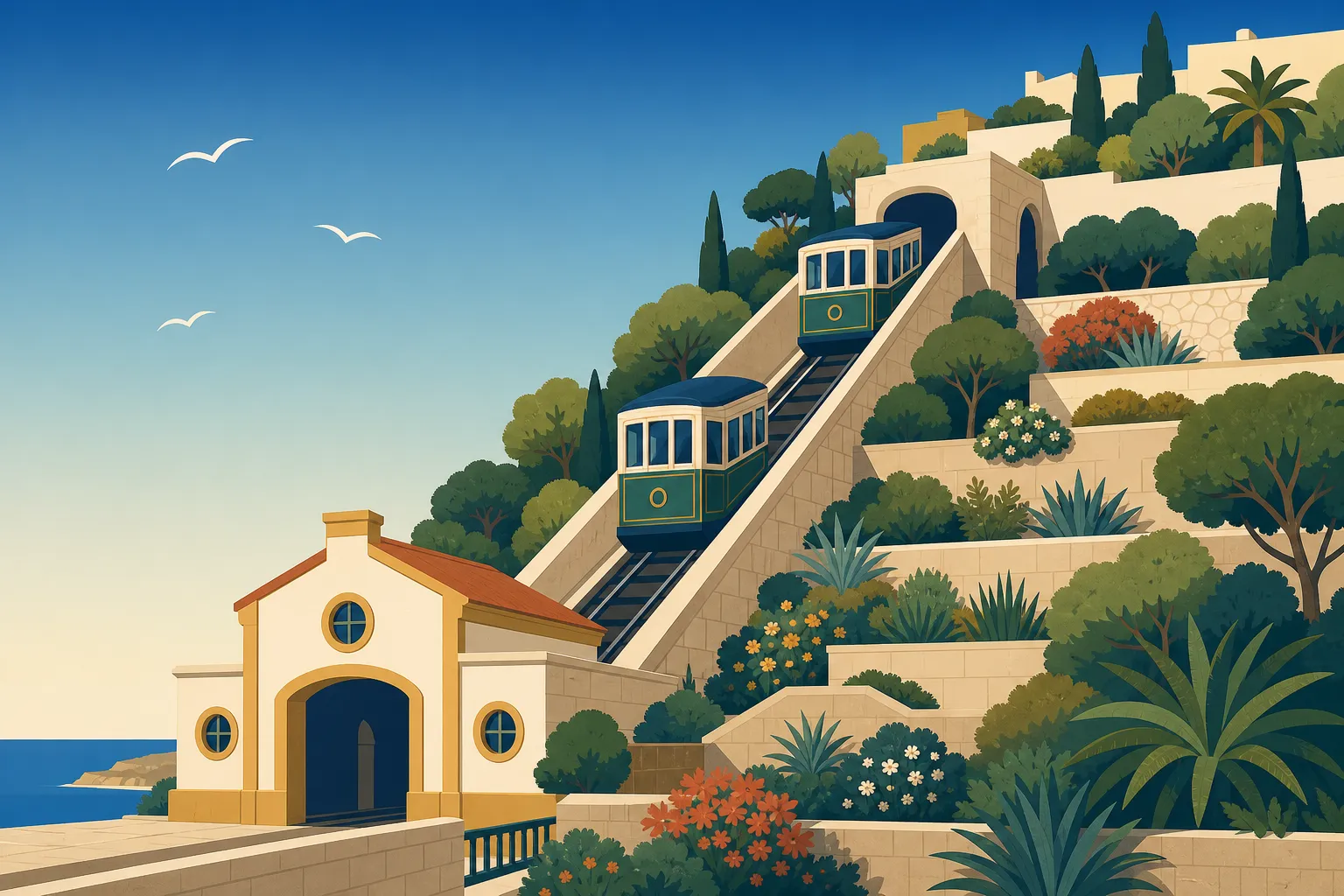
The Summit funicular
Alzareva Sumit opens, carrying residents and visitors 140 metres up Mont Alzar to the terraced gardens in nine minutes.
- 1996
The Blue Line opens
Undreva Blu links downtown to the newly reclaimed docklands of Insa Sural, crossing the new South Bridge.
- 2011
Kalmoro Airport connection
The Blue Line is extended to serve the island’s new airport, cutting the journey from downtown to under twenty minutes.
- 2019
The Onda Card
Contactless payment launches across every line and ferry, alongside the existing paper ticket network.
A note on Kalmish
Kalmish is the everyday language of the isles, spoken alongside English in schools, courts and public life. It shapes every name on this site — station names are Kalmish first because that's how islanders say them; the English name beside it is there for everyone else.
| Kalmish | English |
|---|---|
| Vesera | Authority |
| Kelvun | Transit |
| Undreva | Metro (literally "under-way") |
| Alzareva | Funicular ("rising-way") |
| Maren | Ferry |
| Sonel / Estazió | Station |
| Reva | Line, route |
| Insa / Kesa | Isle / small isle |
| Pont | Bridge |
| Norlan / Sural | North / South |
| Vell / Nira | Old / New |
| Bilet | Ticket |
| Tarva | Fare |
| Kor Pasu | Day Pass |
| Mesa Pasu | Monthly Pass |
| Sumit | Summit |
Accessibility
Twelve of our eighteen stations are step-free from street to platform or pier. Where a station isn't step-free — Sumit Alzar, Mercat Vell, Farol Norlan and Kesa Verda — we say so on the network map, in the timetables, and at the station itself, along with the nearest alternative or the assistance available.
- Tactile paving and audible platform edge warnings at every metro and funicular station.
- Priority seating and a dedicated wheelchair space on every metro carriage, funicular cabin and ferry.
- Ramps carried aboard every ferry crew for pier-height differences at low tide.
- Staff-assisted boarding: call (04) 555 0193 at least 90 minutes before you travel and we'll have someone ready.
- Guide and assistance dogs travel free on every service, no booking needed.
- Large-print and audio timetables available on request from the Vellaporto Hub.
Sustainability
Every metro and funicular service on the network runs on electricity drawn from the Mont Alzar wind array and the tidal barrage at Port Sural, commissioned in 2016. Our two ferries have run on hybrid diesel-electric propulsion since their 2014 refit, cutting harbour emissions by roughly a third. A single Day Pass replaces, on average, four private car journeys across the bridges at peak time.
How we speak to you
We publish service notices as soon as we know about them, we say "sorry" when a delay is our fault, and we always give a plain-English reason for disruption — not just a code. If something on this site is unclear, our enquiry form reaches the same small team that writes it.