About the authority
Moving Sarvéna since 1898
The Sarvéna Transit Authority is the public body that runs every metro train, tram, funicular car and ferry in the city. We are owned by the people of Sarvéna, and we answer to them.
The city
A city built on the water
Sarvéna sits on five islands in the Corran Sea, a sheltered stretch of warm-temperate water between two headlands. The isles were settled by salt traders in the fourteenth century, who dug pans in the southern shallows and shipped their harvest across the strait. Where they landed, the old port grew; where they built their watchtower, the Old Castle still crowns the hill.
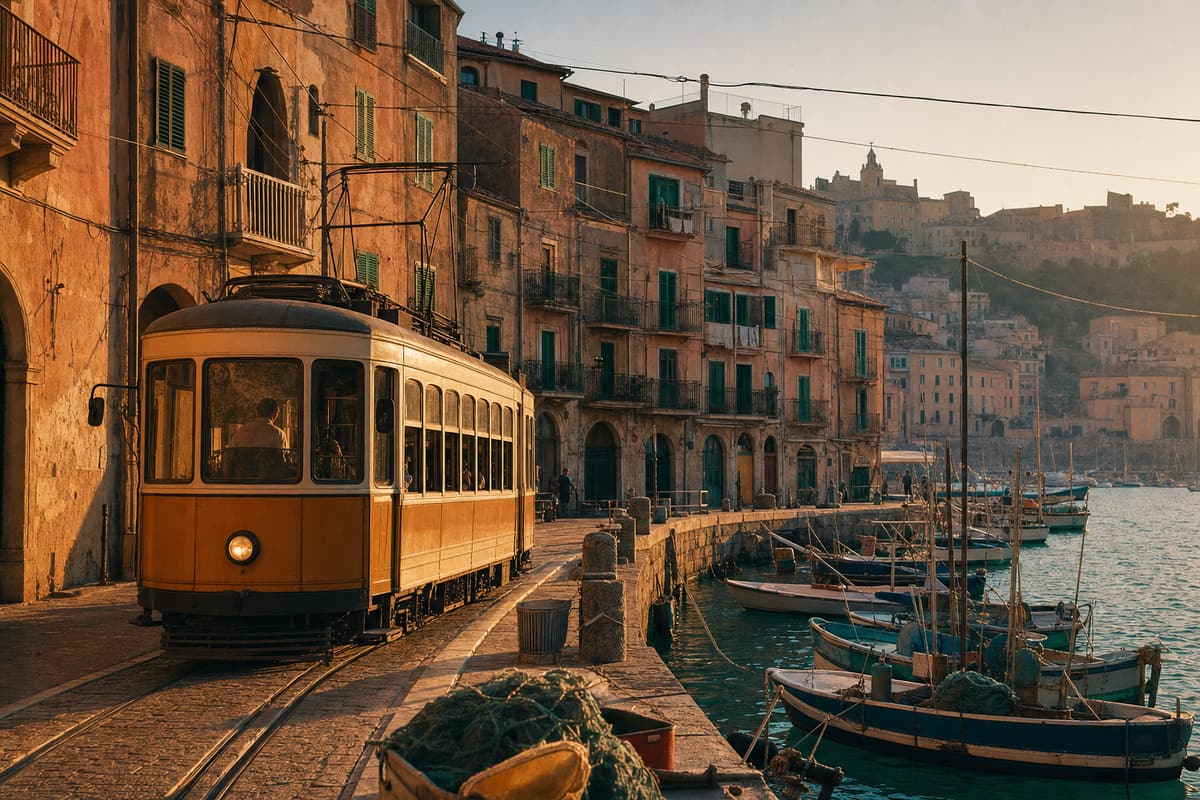
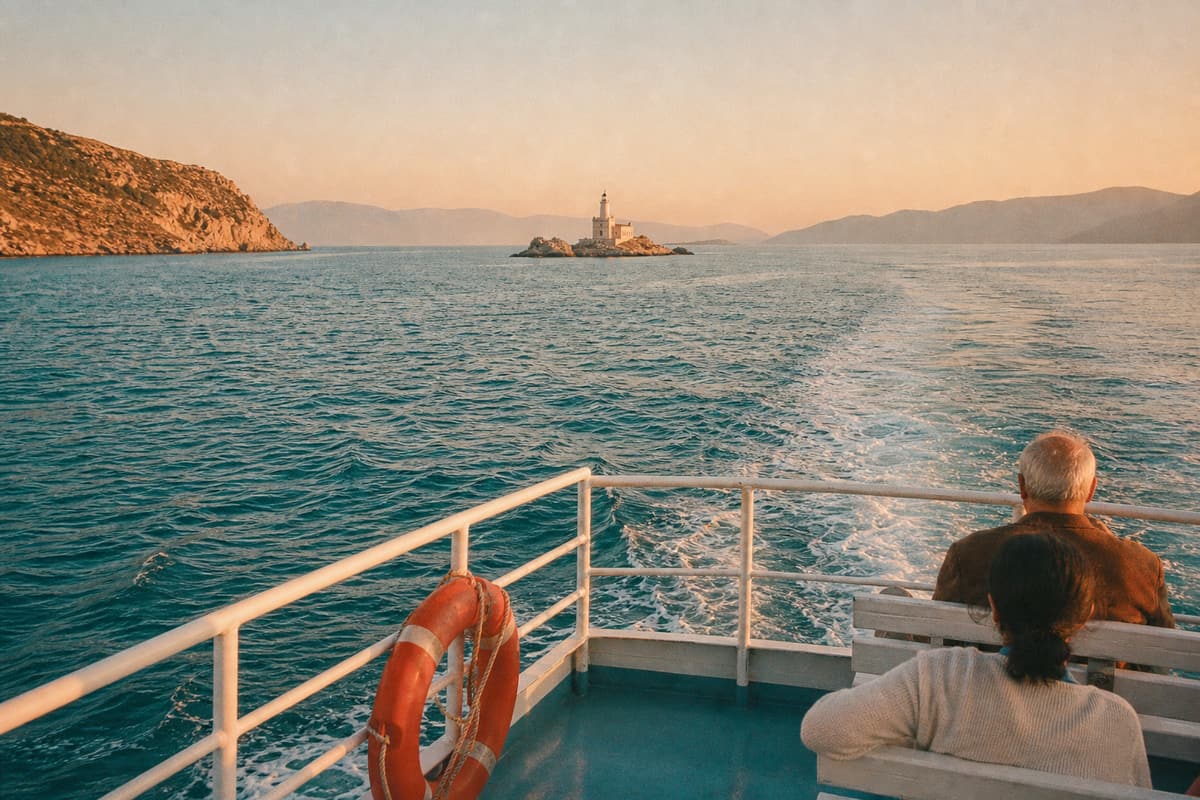
Because the city is water first and land second, its transit has always been about crossings. The strait between the old town and Càlanòva is too deep to bridge everywhere, so the ferry endures where the metro cannot reach — and the funicular exists because the Old Castle sits two hundred steep metres above the market. Everything the authority runs is an answer to the shape of the islands.
The city speaks Sarvenc, a language of the isles with its own words for the sea (el Mar Corràn), the hill (brac) and the crossing (travessia). Every station and line on this network carries its Sarvenc name and its English name, side by side, exactly as you will hear them announced on board.
Our story
A hundred and twenty-odd years of crossings
- 1898
The city charters the Autoritàt de Trànsit de Sarvéna and lays the first horse-tram rails along the quays of the old port.
- 1911
The quayside tram is electrified, becoming the Línia Tramvìa (T) and running end to end from West Lighthouse to East Cove.
- 1934
The Funicular del Brac (C) opens, hauling passengers from the Grand Market up to the Old Castle in four minutes.
- 1971
The Línia Mar (M1) opens — the first metro to tunnel beneath the old town, linking Tramunt to the new eastern districts.
- 1989
The Línia Brac (M2) crosses the isle north to south, and the Corran ferry is brought under the authority as Line F.
- 2008
A single three-zone fare and the corràn travel card replace a tangle of separate tickets across all four modes.
- 2019
The step-free access programme is completed: every metro station and ferry quay is now level-boarding.
How we speak to the city
Plainly, and in good time
We tell you what is happening before you have to ask. Disruptions are announced on the board, on the platform and in the app the moment we know of them, in Sarvenc and English. We do not hide behind jargon: if the last ferry is cancelled, we say the last ferry is cancelled, and we tell you what to do instead.
"Tot l’ìsel, un bilhèt." — The whole island, one ticket.
Accessibility
Travelling with us if you need a hand
Every part of this network is meant to be usable by everyone. Here is what we provide, and how to ask for more.
Step-free access
All 8 metro stations and all 3 ferry quays are level-boarding, with lifts to every platform. The funicular cars and their two terminals are step-free. Tram stops have raised kerbs; the low-floor trams bridge the gap with a fold-out ramp on request.
Seeing & hearing
Next-stop announcements are made by voice and shown on screen on every vehicle, in both languages. Platform edges and stair nosings carry tactile, high-contrast paving. Our maps and signs meet a minimum contrast ratio, and this website works with a screen reader and keyboard alone.
Assistance & priority
Priority seats sit nearest every door, marked in sand yellow. Assistance dogs are welcome on every mode at no charge. Staff at any gate can help you board; there is no need to book, though for the ferry we ask you arrive 10 minutes early so the crew can set the boarding ramp.
Ask us anything
Our accessibility team can arrange a guided journey, a companion pass, or an alternative route. Call +76 21 550 600 (07:00–20:00) or email info@ats.sv. You can also send an accessibility request through our contact form.