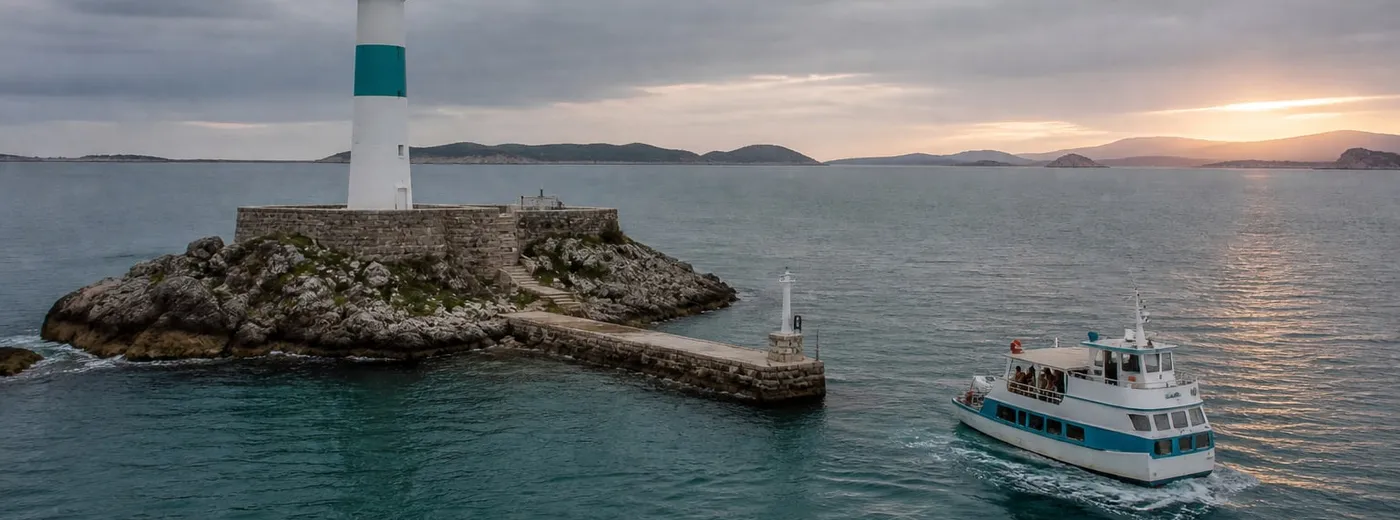
Every island. One network.
Veikavan is the public transport authority for Ilmarren, a city of 412,000 people spread across five islands in the Vael Sea. We have run the ferries, the metro and the funicular as a single network with a single fare since 1962.
What we do
Ilmarren means Ring of Islands in Marrenic, and the geography sets the task: no two of the main islands are more than a kilometre apart, but every journey of any length crosses water. Our job is to make that crossing so ordinary that nobody thinks about it.
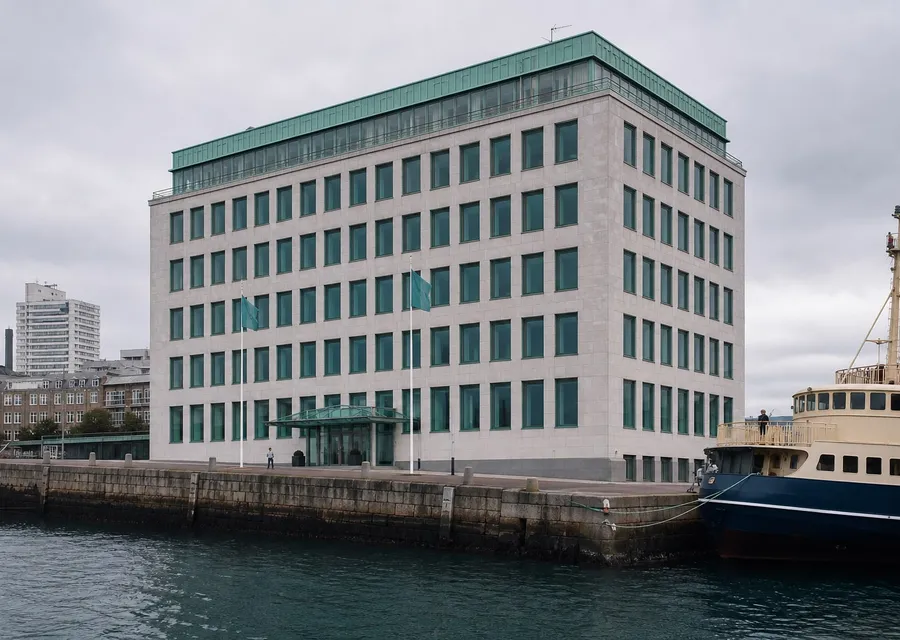
We plan the timetable, run the services, maintain the tunnels, bridge, piers and vessels, set fares under the city's fare policy, and look after the 20 stations and piers. We are owned by the city and answer to the Ilmarren Council's Transport Committee, which approves fares each October.
The network today:
- Halvei · MetroM1 Dunmar LineM2 Shore Line
- Marvei · FerryF1 Harbour FerryF2 Lighthouse Ferry
- Kelvei · FunicularK1 Kelvet Funicular
- lines across three modes
- 5
- stations and piers
- 20
- stations step-free
- 14 of 20
- staff, from skippers to signallers
- 1,140
- journeys in 2025
- 63 million
- services on time in 2025
- 94.2%
A century and a half of crossings
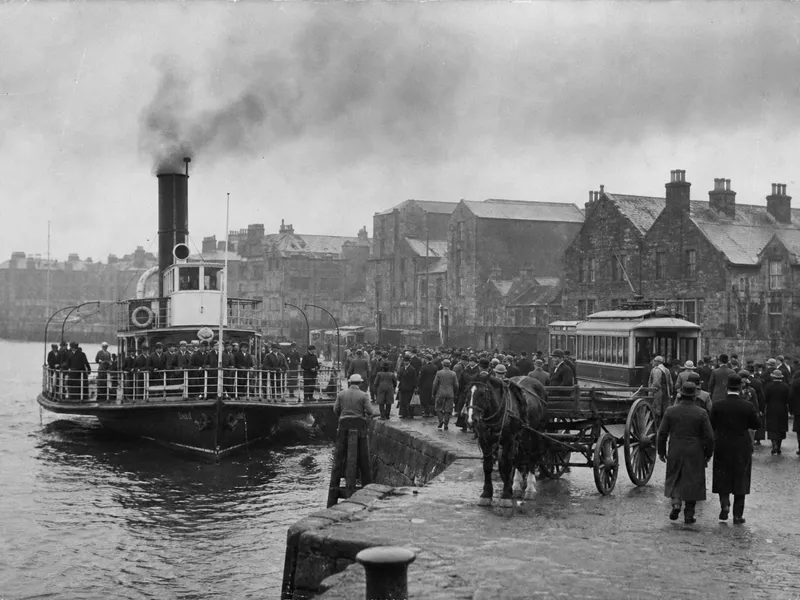
The network grew the way the city did: island by island, one crossing at a time.
- 1874
The first steam ferries
The Halvon & Dunmar Steam Packet Company begins a twice-daily crossing of the Rinveth strait. For the first time a Dunmar market trader can sell in the Old Town and be home for supper.
- 1908
The Kelvet Funicular opens
Built to carry quarry stone down from Tower Hill, the funicular is opened to passengers within a year. The two original wooden cars ran until 1971; one is preserved in the Tirkel upper station.
- 1931
Ferries under one flag
Seven competing boat companies are merged into the Ilmarren Harbour Board after a winter of fare wars left two of them bankrupt. Common tickets across the piers are introduced for the first time.
- 1949
Kelvet Bridge
The road and rail bridge across the eastern strait connects Kelvet to Halvon. Electric trams run over it until the metro replaces them.
- 1962
Veikavan is founded
The city charter creates the Ilmarreni Veikavan, the Ilmarren Transit Authority, bringing the Harbour Board, the tramways and the funicular into one public body with a single fare table. The ring-and-wave mark is adopted the same year.
- 1978
The Dunmar Line
After eleven years of tunnelling under the Rinveth strait, M1 opens between Dunmar Vanna and Selsta Ost. It is extended to the university in 1981 and south to Suliss in 1994.
- 2006
Aerost
The Dunmar Line reaches the airport. The three-zone fare structure still used today is introduced with it.
- 2017
The Shore Line
M2 opens along the Halvon waterfront and over the rebuilt Kelvet Bridge, giving Kelvet its first rail link since the trams. The Harbour Ferry becomes the cross-bay express it is today.
- 2024
Every line, one tap
Contactless fares with daily capping arrive across all five lines. Paper tickets remain available at every station and pier, and always will.
The ring and the wave
The mark was drawn in 1962 by the harbour signwriter Edda Vannakel and has changed only in its colours since. The ring is the city itself, the arren of Ilmarren, the islands seen from above. The wave through it is the water every journey crosses, and the line of a route across a map.
It appears in navy on our vessels, cars and stations, in white on the navy of our uniforms and signs, and in amber where it marks a point of help: information desks, help points and the doors of accessible cars. The amber is the colour of the old harbour lamps and of the funicular's original cars.
Every line has its own colour but shares the same badge shape, so that a visitor who cannot read Marrenic can still follow a colour from the map to the platform to the vehicle.
Leadership
- Ilse MarrenkelChief Executive
Joined as a ferry deckhand in 1998; ran the Harbour Ferry for a decade before leading the authority.
- Torv AeldunDirector of Operations
Responsible for the daily service across metro, ferry and funicular, and for the control room at Nevost Quay.
- Renna SulisskaDirector of Customer Experience
Fares, stations, information and access. Chairs the Passenger Panel with the Ilmarren Disability Forum.
- Ansel KortirvenDirector of Engineering
Track, vessels, cars and the Kelvet Bridge. Leads the current bridge track renewal.
The authority is governed by a board of nine: four appointed by the Ilmarren Council, two elected by staff, two passenger representatives nominated by the Passenger Panel, and the Chief Executive.
Our commitments
- A train or funicular car every ten minutes or better in the daytime, and a Harbour Ferry at least every twenty minutes, seven days a week.
- One fare table across all modes, published in Marrenic and English, with no supplement for the airport or the ferries.
- Step-free access everywhere we can build it. 14 of 20 stations and piers are step-free today; the remaining 6 have a staffed assistance service.
- Paper tickets forever. Every station and pier will always sell a ticket for cash.
- Straight answers. Disruption is announced with the cause, the plan and the time we expect to fix it, on the boards and on the service updates page.
- A reply to every enquiry within five working days. Complaints get a named person, not a reference number.